Bush Hogging & Field Mowing in Bentonville, AR

Field mowing and bush hogging use a tractor-mounted rotary cutter to bring down tall grass, weeds, briars, and young saplings on pastures, acreage lots, and overgrown fields around Bentonville. Many properties at the edge of town sit on rolling Ozark ground with hidden rocks, old stumps, and drainage swales, so careful cutting height adjustment and a planned mowing pattern make a real difference. We walk each field first. Our 2026 schedule is open for spring and early summer cutting, and Bentonville Land Clearing Specialists handles every job with trained operators and steady, safe equipment practices.

Request a Written Estimate (479) 326-7541

Schedule Your Field Mowing

Share a few details about your Bentonville property, and our team will follow up to plan a site walk and provide a clear written estimate.

- Bush Hogging Service Overview -

What Our Bush Hogging & Field Mowing Service Includes

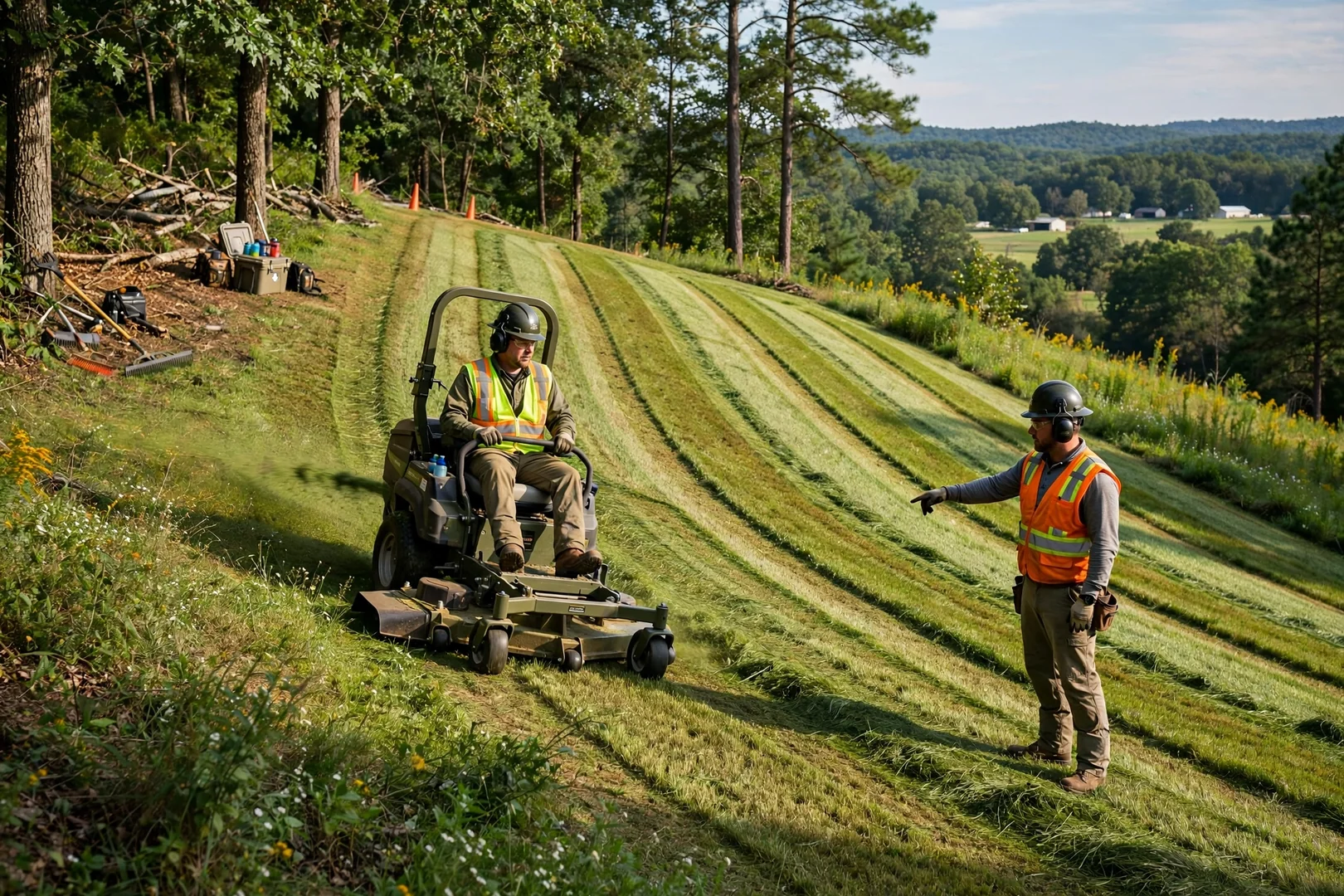
Bush hogging and field mowing is the process of cutting heavy grass, brush, briars, and small saplings with a tractor-driven rotary cutter, and at Bentonville Land Clearing Specialists it includes a pre-mow inspection, a debris walk, and controlled cutting across Bentonville properties. Before any blade turns, our technicians flag stumps, fence lines, well heads, and buried rock so deck height and PTO speed can be set to match the terrain. Safety comes first on every pass. We mow in overlapping rows that follow the slope, which lowers rollover risk on hillsides and leaves an even stubble height that recovers cleanly. Residential acreage, commercial frontage, and multi-unit common areas all receive the same written estimate and post-job walkthrough. For 2026, we are timing cuts around Northwest Arkansas growth cycles so fields stay manageable without rutting soft soil during wet months.

Click Me to Call: (479) 326-7541

What Signs Mean Your Property Needs Bush Hogging & Field Mowing?

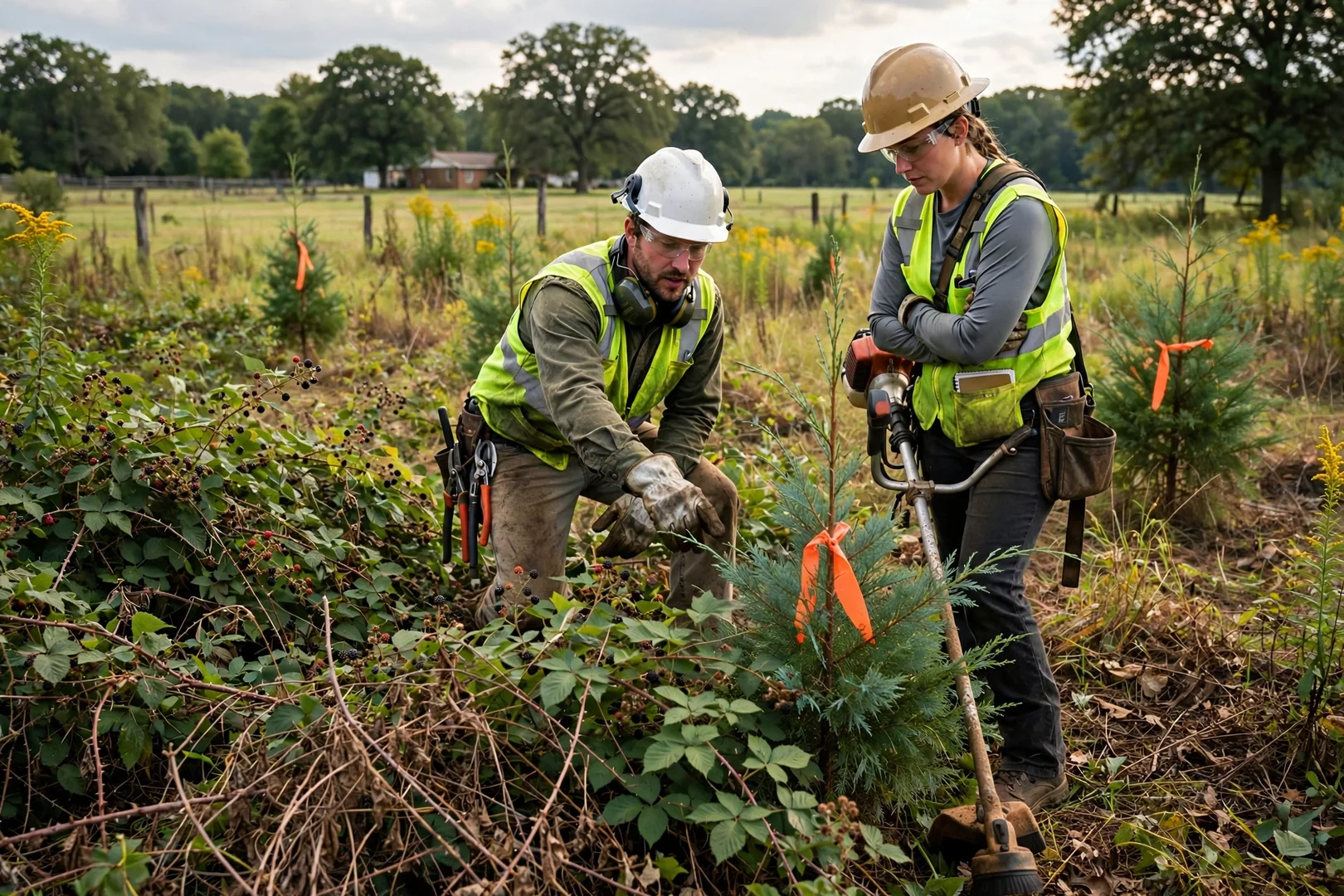
Your property likely needs bush hogging and field mowing when grass stands past knee height, woody saplings begin crowding open ground, or fence lines and access paths start disappearing under overgrowth. Around Bentonville, warm and humid summers help fescue, Johnson grass, and blackberry briars spread quickly, and thick thatch can conceal stumps, rocks, and drainage ditches.

Overgrown fields also give ticks, chiggers, and rodents cover close to homes and outbuildings. Dry grass adds fuel load. During the late-summer dry stretches expected in 2026, thinning that dense dead growth near structures is a sensible preventative step. A planned rotary cutting service resets the field, restores clear sightlines, and makes ongoing maintenance much simpler for Bentonville property owners.

Overgrown field with tall grass and saplings along a Bentonville fence line

// Field Mowing Cost Factors //

How Much Does Bush Hogging & Field Mowing Cost in Bentonville?

Bush hogging and field mowing pricing in Bentonville depends mainly on total acreage, vegetation height and density, and terrain conditions, and every 2026 job is priced after a short on-site review. Acreage sets the baseline. Dense overgrowth such as tall fescue, sericea lespedeza, blackberry thickets, or woody saplings slows the rotary cutter and adds machine hours. Slope, rock outcrops, and wet draws common across Northwest Arkansas ridges also affect cost, because uneven ground calls for slower passes and careful tractor positioning. Hidden obstacles like old fencing, stumps, and buried debris need to be located and flagged before mowing begins, which can add prep time. Access and mobilization matter as well, including gate width, trailer parking, and distance from paved roads, so exact pricing always follows a site assessment and a free written estimate that lists each factor clearly.
Call us on: (479) 326-7541
Tractor with rotary cutter mowing an overgrown pasture on rolling ground near Bentonville

How We Handle It

How Do We Perform Bush Hogging & Field Mowing in Bentonville?

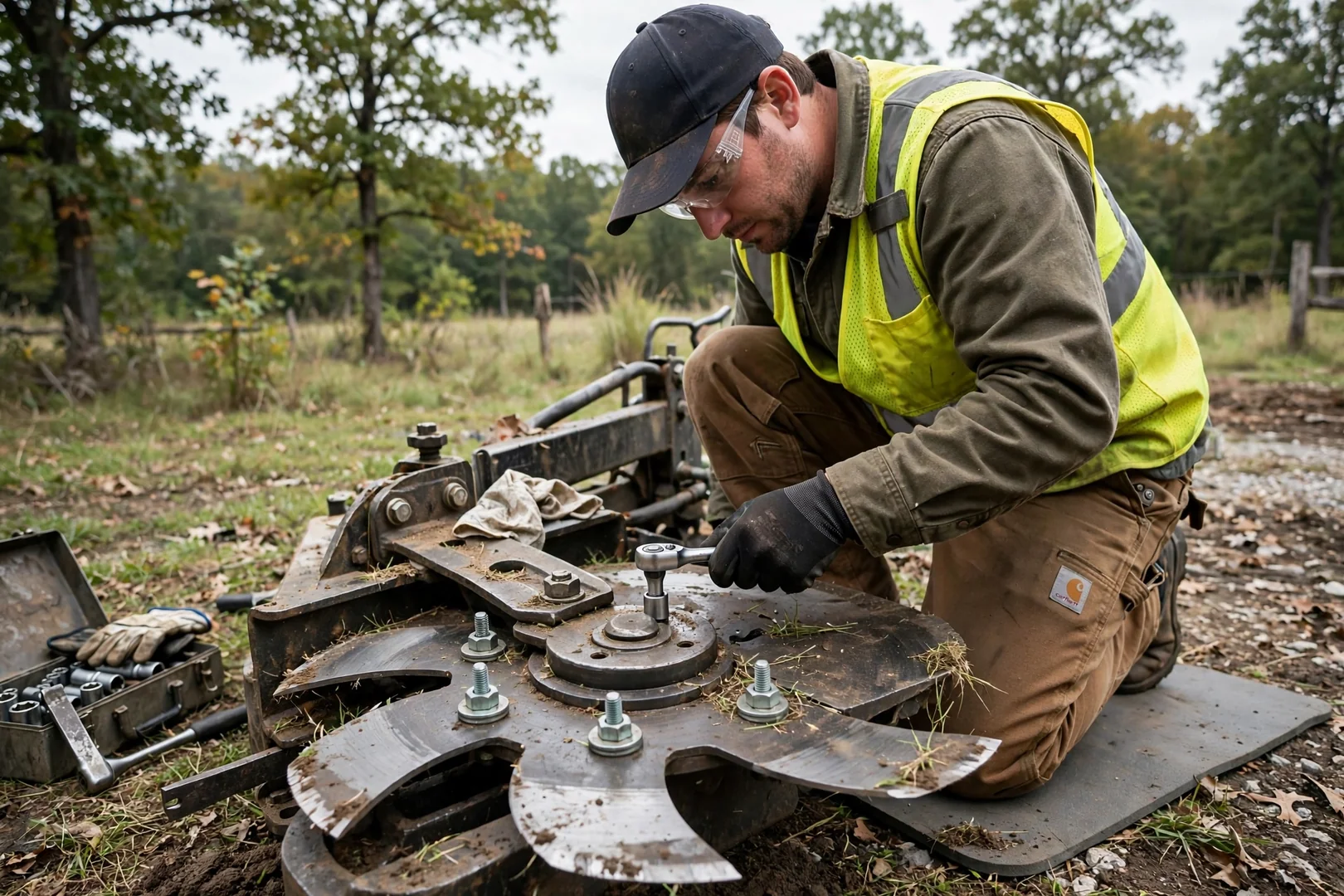
Operator inspecting a rotary cutter deck before mowing a tall grass field in Bentonville

Site Walk and Hazard Flagging

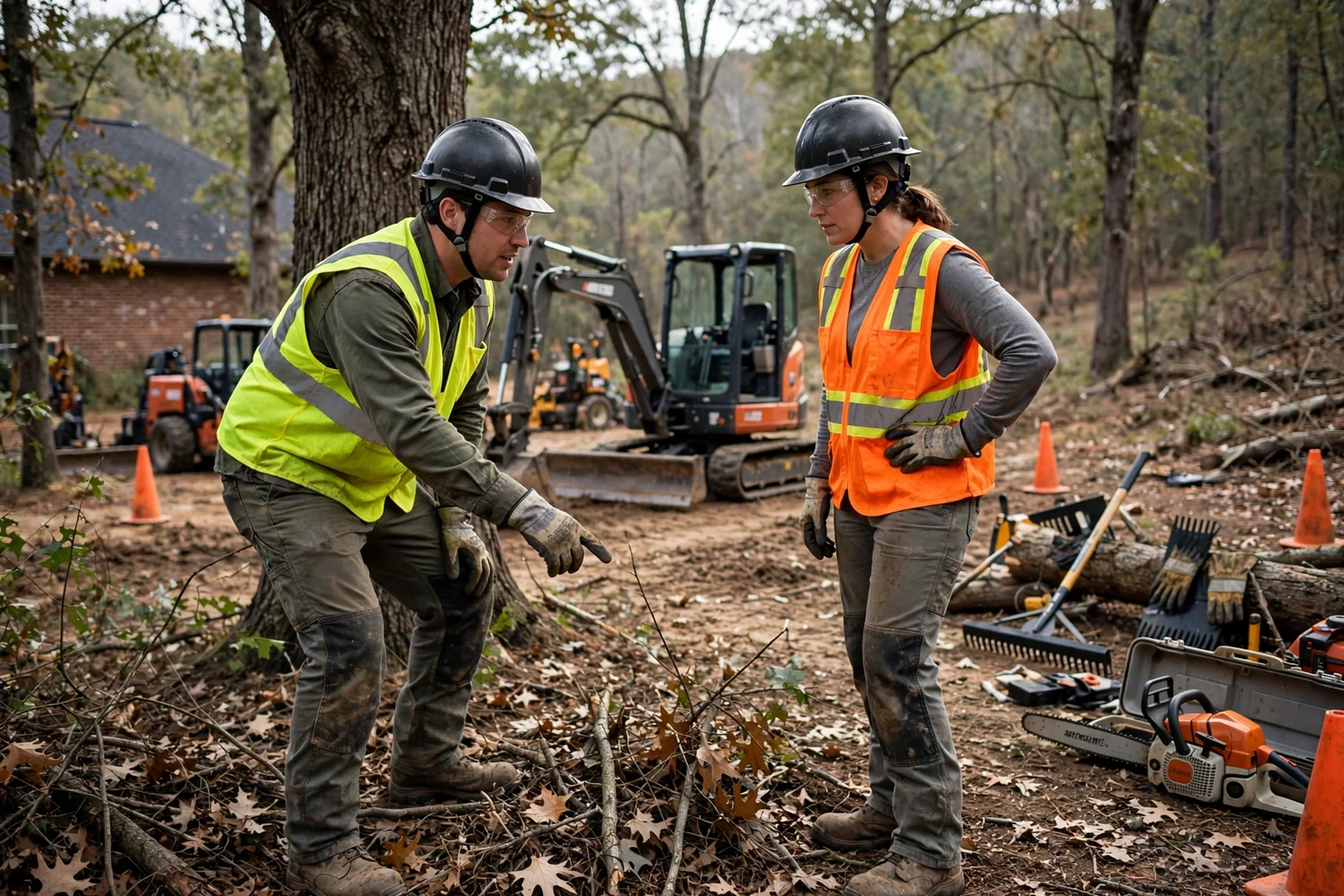
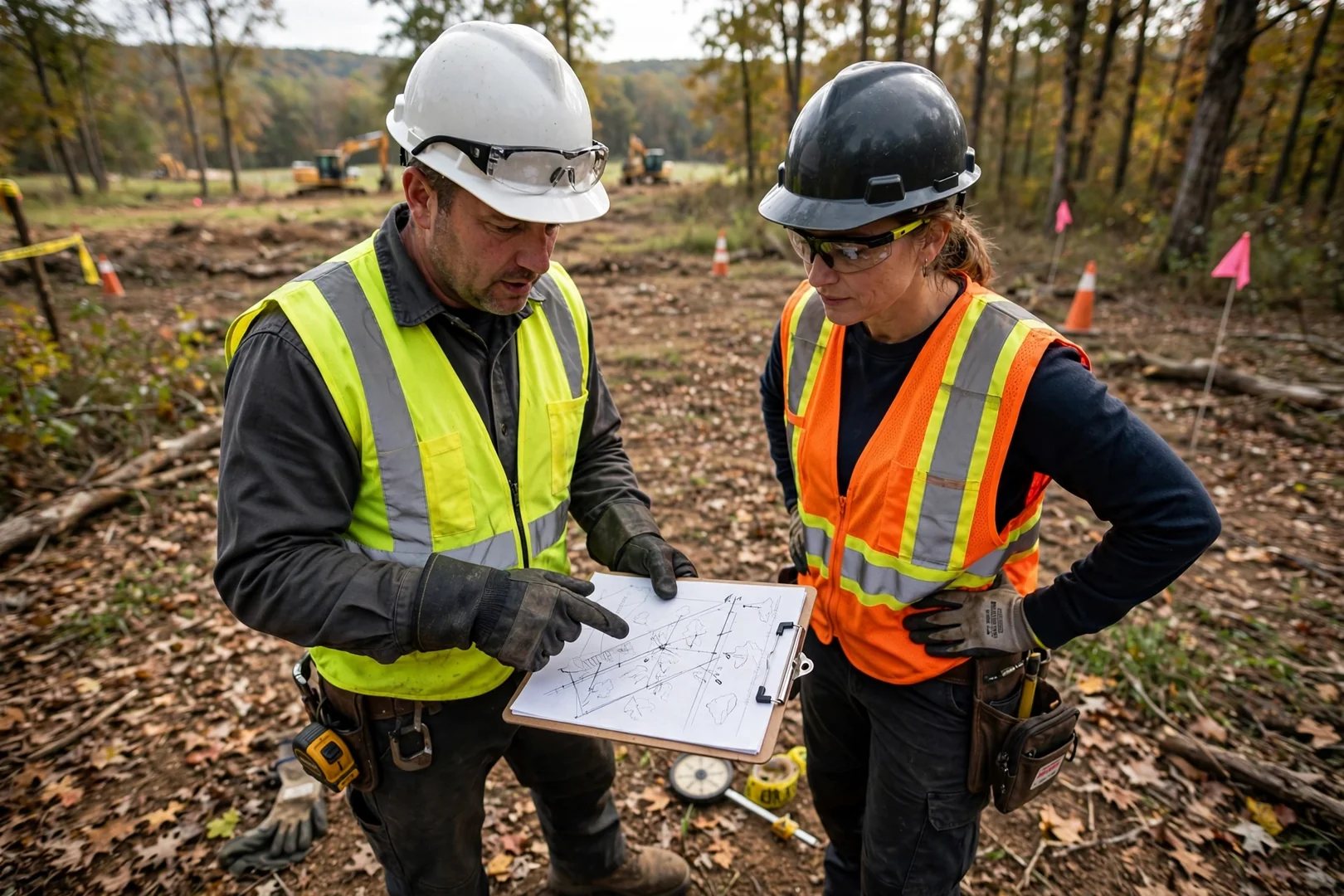
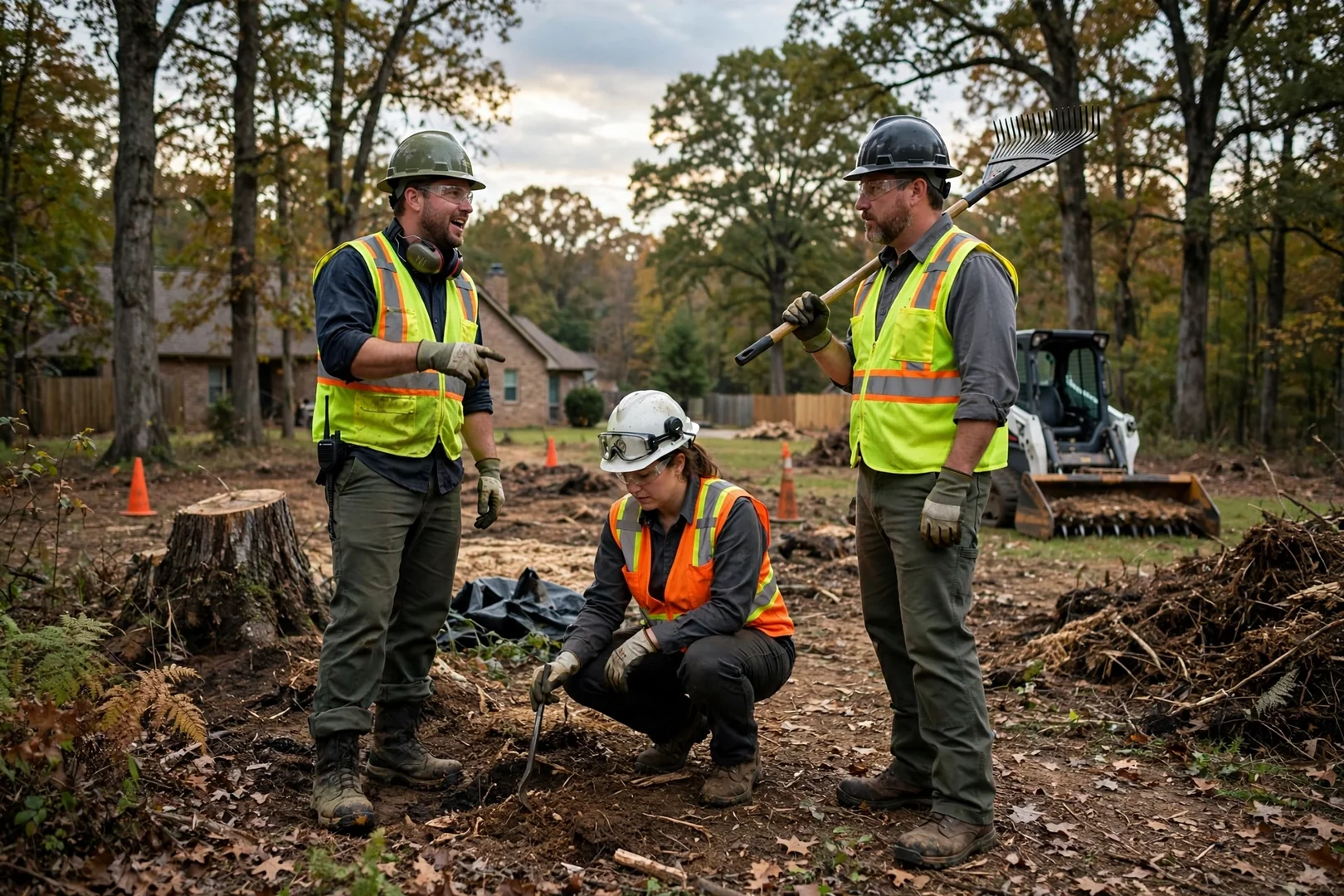
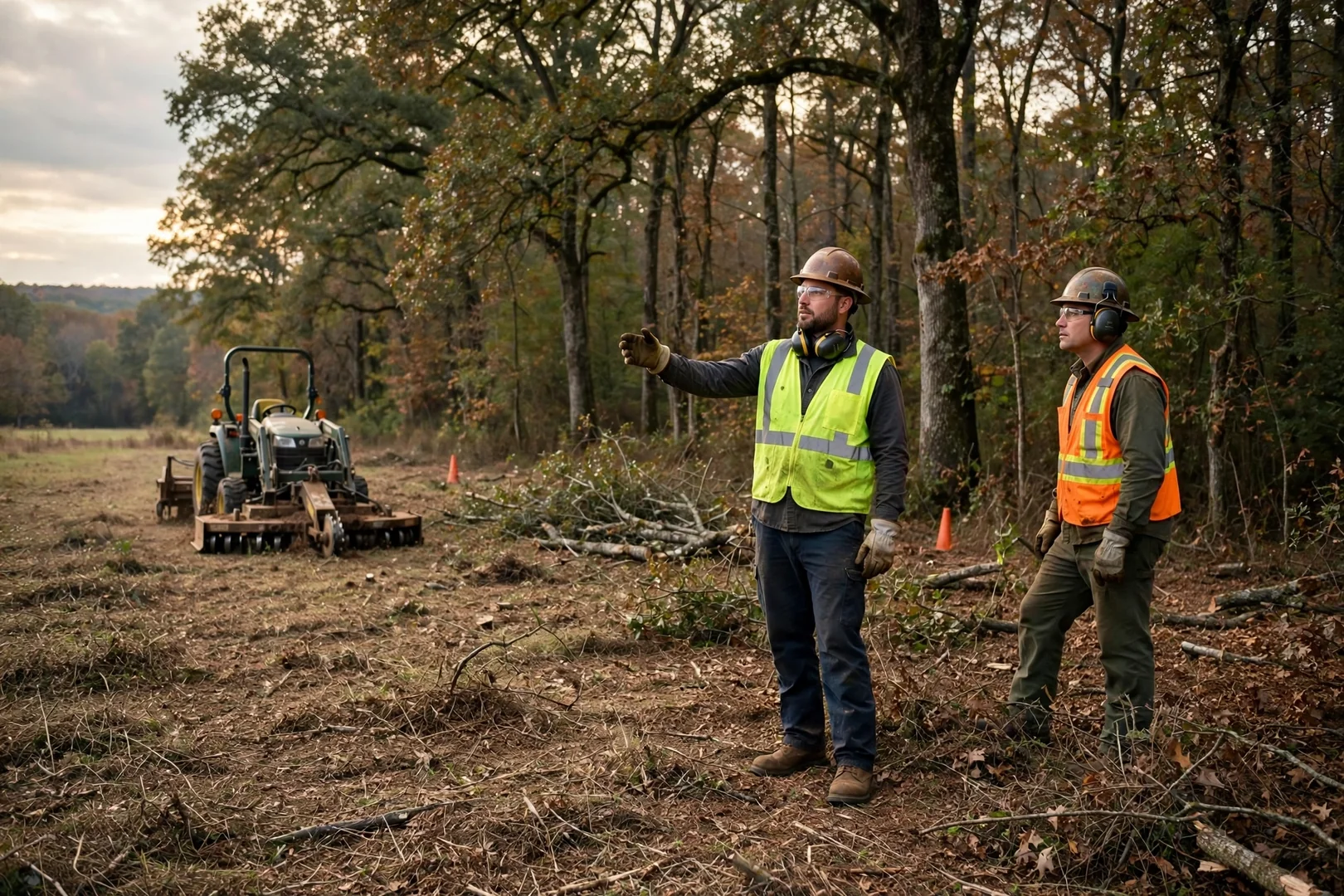
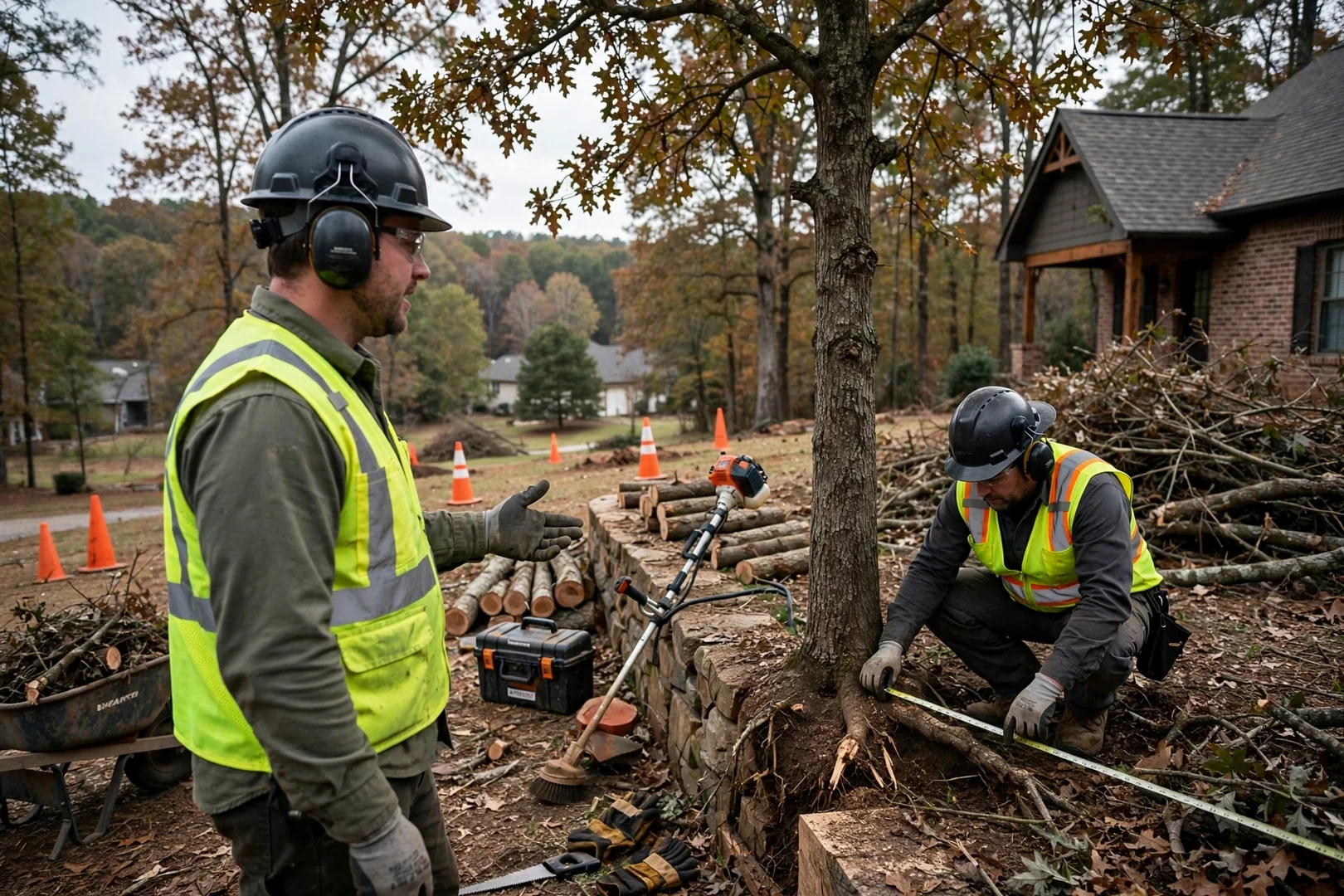
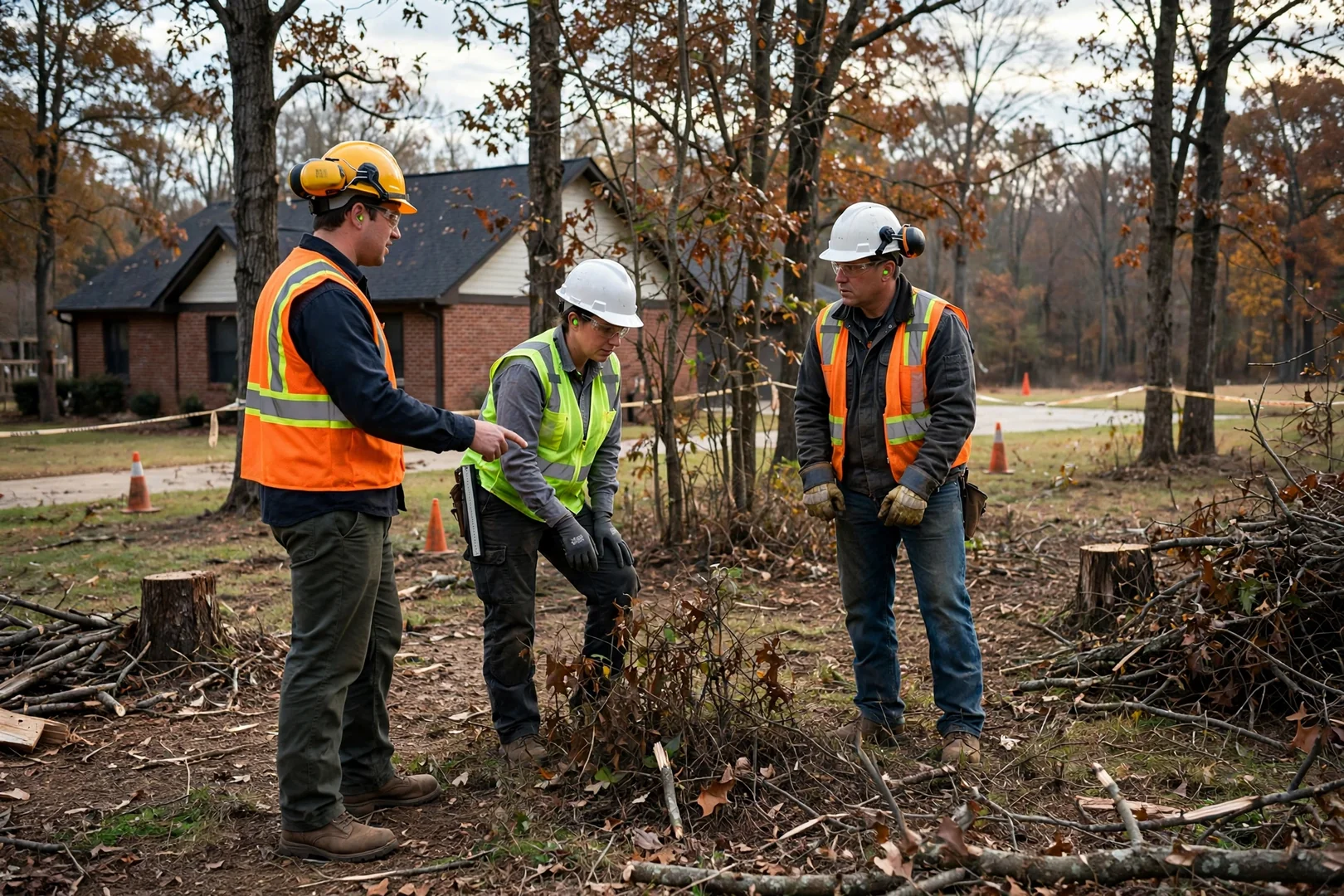
Our process starts with a careful walk of the property before any equipment is unloaded. Technicians look for stumps, rock ledges, fence remnants, wellheads, and soft ground, then mark each hazard with flags so the tractor operator can plan around it. We also confirm property lines and any areas you want left untouched. Nothing is guessed. The findings go into your free written estimate so the plan is clear from the first day.

Equipment Check and Cutting Plan

Next, the crew inspects the rotary cutter, blades, shear bolts, PTO shaft guards, and tractor tires to confirm everything meets safe operating standards for 2026 work. Cutting height and travel speed are set to match the vegetation, whether that is light pasture grass or dense brush with small saplings. On sloped Bentonville acreage, we map mowing passes across the safest direction of travel. This keeps the machine stable and the finish even.

Controlled Mowing and Final Walkthrough

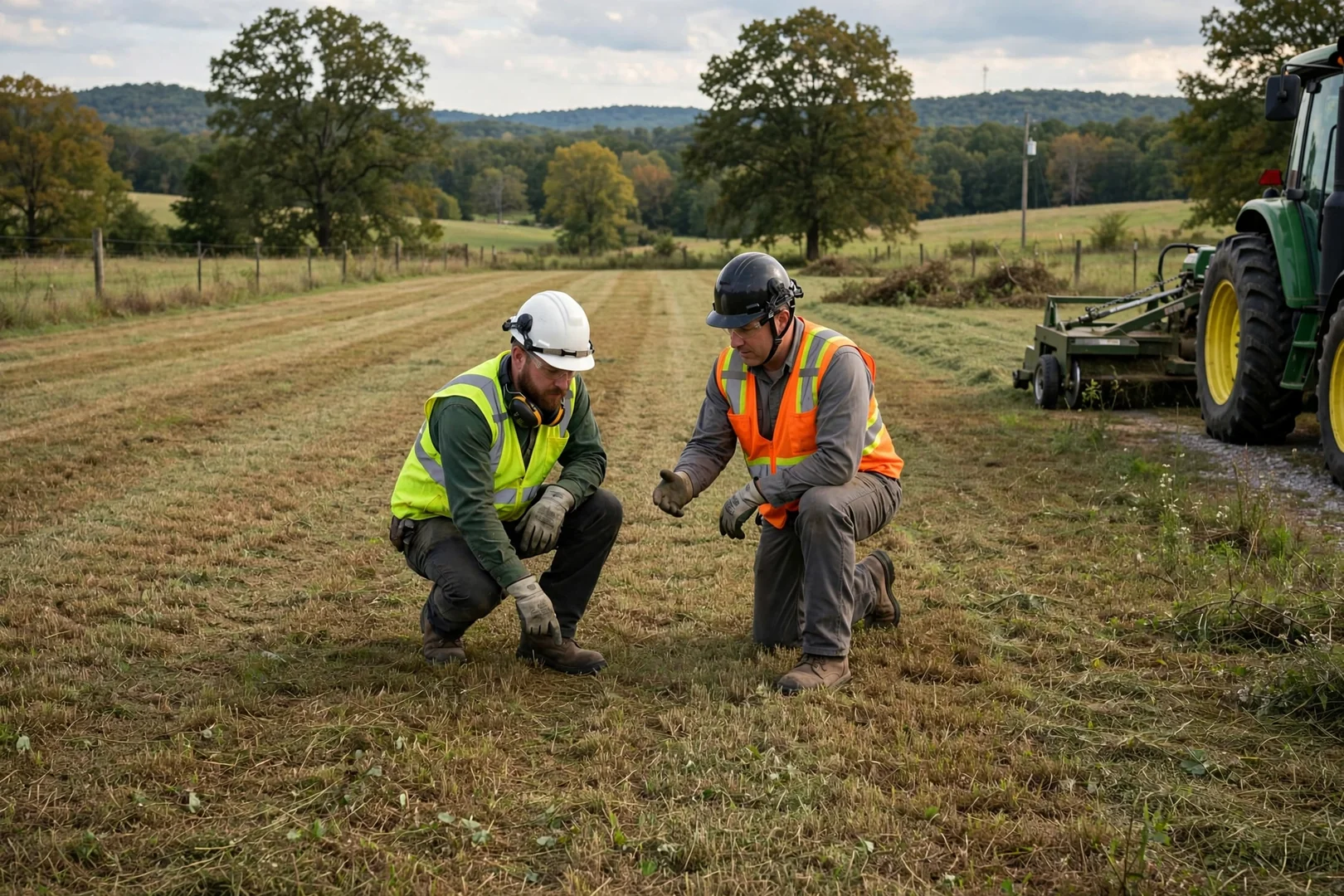
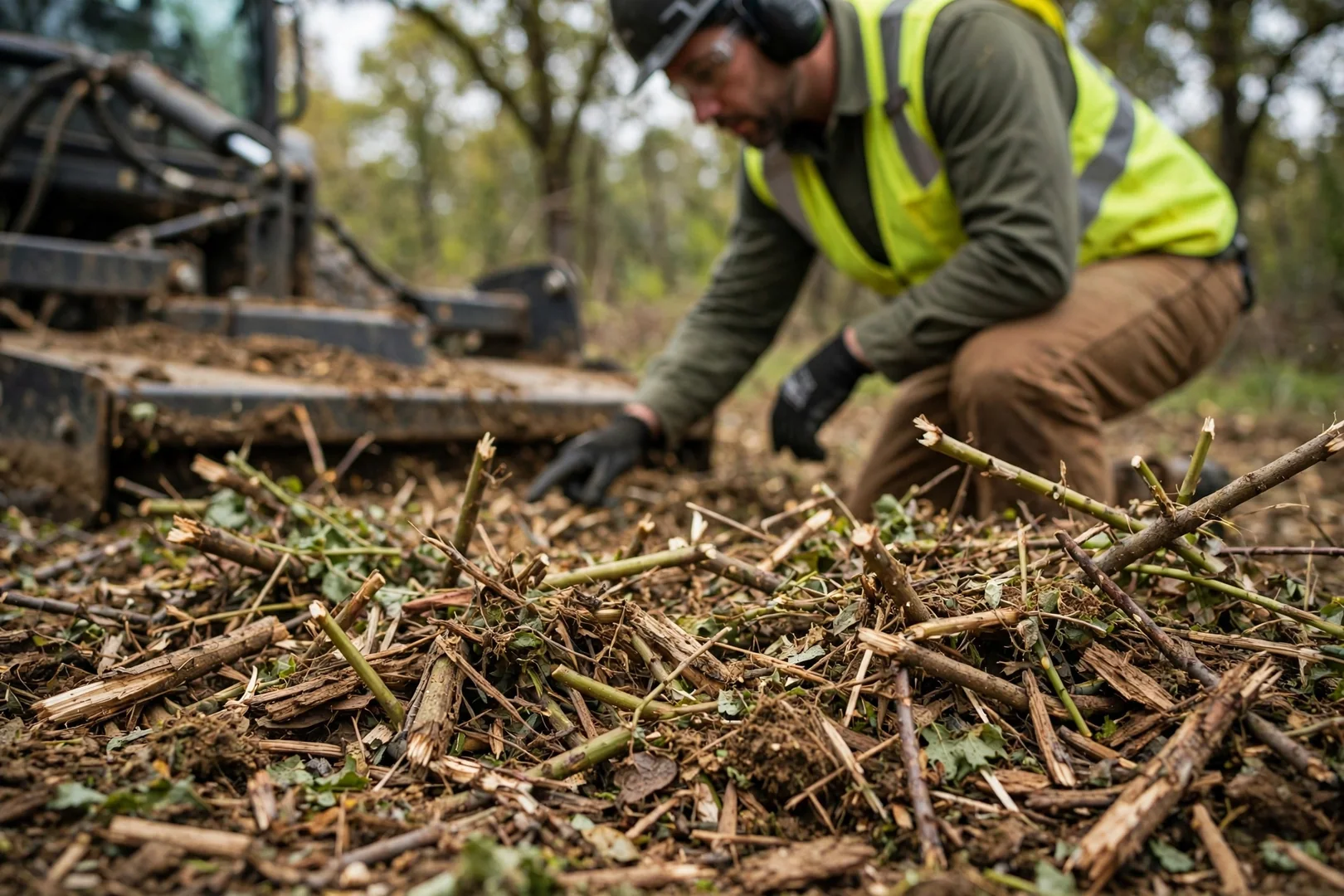
Mowing proceeds in steady, overlapping passes, with the operator slowing near flagged areas, fence lines, and drainage swales to protect your property. Bystanders and pets are kept well clear of the discharge zone throughout the job. Once cutting is complete, we review the field for missed strips or debris. A post-job walkthrough with you confirms the results and answers any questions about future maintenance mowing.

Recent Field Mowing Jobs

Bush Hogging & Field Mowing Work Completed in Bentonville in 2026

Across Bentonville and the surrounding countryside, our 2026 bush hogging work has ranged from small residential lots with knee-high grass to multi-acre pastures overtaken by blackberry, sumac, and young cedar. Each property brings its own conditions. Some fields sit on gentle, open ground, while others include rocky ridgelines, wet draws, and old fence lines hidden under years of overgrowth. Our technicians match the rotary cutter, cutting height, and tractor ballast to each site so the finish stays even and the equipment stays stable.

Every job begins the same way, with a site walk, hazard flagging, and a full inspection of blades, shear bolts, and PTO guards. Slow, overlapping passes near drainage swales, utility markers, and structures help protect both the property and the people nearby. Safety guides every decision. When the mowing is complete, a post-job walkthrough confirms the results and gives Bentonville property owners a clear picture of when the next maintenance cut may be helpful.

Frequently Asked Questions About Bush Hogging & Field Mowing in Bentonville

These answers cover common bush hogging and field mowing questions from Bentonville property owners in 2026. Each explains our process, safety steps, and planning. Reach out with anything else.

For most Bentonville pastures and overgrown fields, late spring through early fall is a practical window for bush hogging, and many owners add a final cut before winter. Scheduling around dry ground lets the tractor and rotary cutter work without rutting soft soil. For 2026, we suggest calling ahead so we can plan a visit that fits your field’s growth cycle and recent rainfall.

A standard visit includes a walk-through inspection, cutting the vegetation with a tractor-mounted rotary cutter at an agreed cutting height, and a post-job walkthrough with you. During the inspection, our technicians flag hidden hazards such as stumps, rock outcrops, fence wire, and irrigation lines before any blade engages. Your written estimate lists the acreage, the type of growth, and any areas we will avoid for safety.

The most helpful preparation is removing loose items from the field and marking anything we might not see, such as septic lids, well heads, buried lines, or survey stakes. Tall fescue, briars, and saplings can hide objects that a rotary cutter could throw or strike. Please also confirm gate access and a clear path wide enough for the tractor and trailer.

Pricing is based on the acreage, the height and density of the growth, the terrain, and how many obstacles our crew must work around. A field of light grass mows faster than one with thick brush and woody saplings that need repeated passes with the cutter deck. We visit the property first and provide a written estimate, so you know what to expect before work begins.

Bentonville’s rolling Ozark terrain, limestone rock, and clay soils mean our operators adjust ground speed, cutting height, and mowing direction to keep the tractor stable and the blades clear of rock. Steep slopes are mowed across or along the grade based on what keeps the machine safest. After heavy Northwest Arkansas rain, we may wait for the ground to firm up so we protect your soil and avoid deep ruts.

Free Field Mowing Estimates

Schedule Bush Hogging & Field Mowing in Bentonville

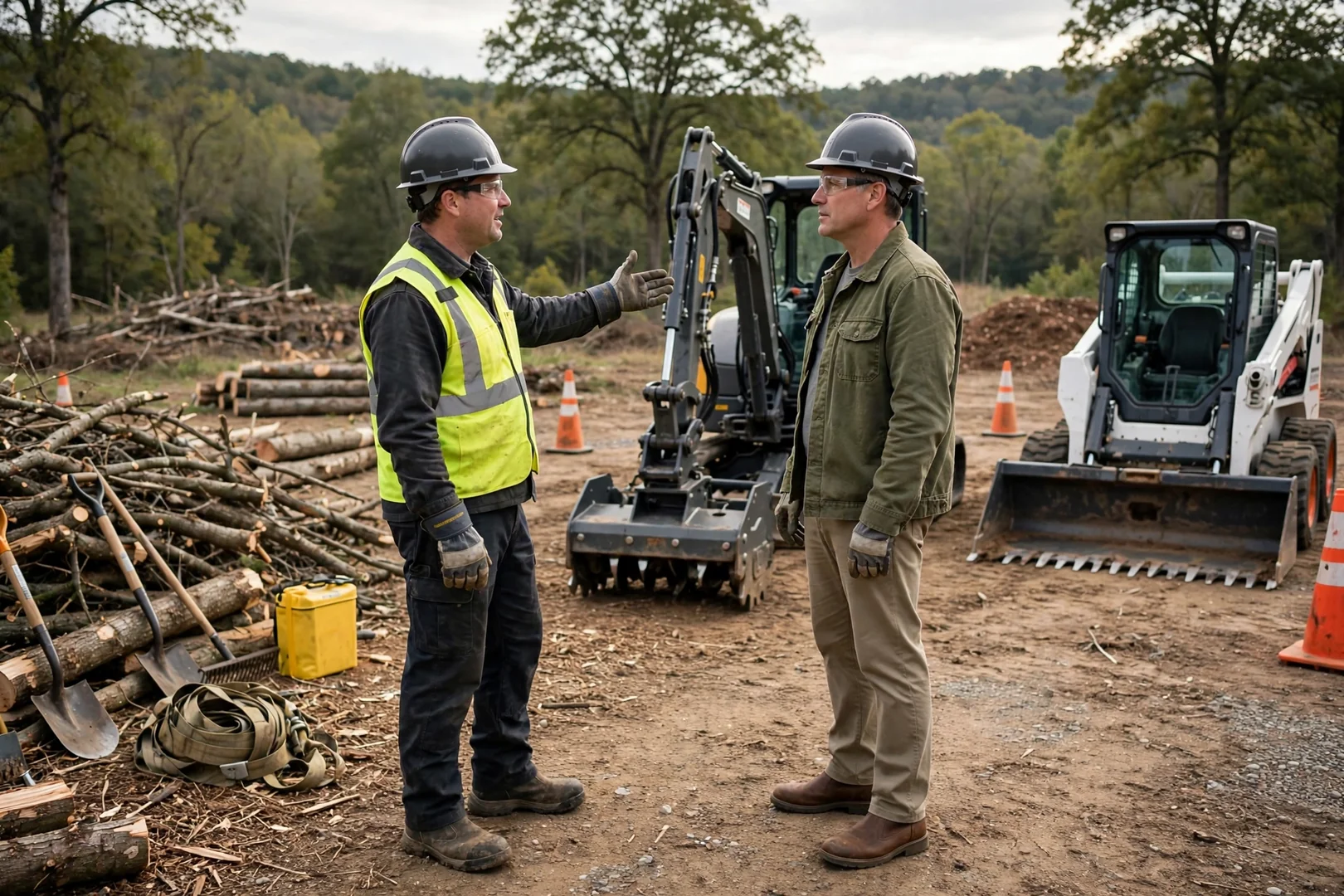
Planning your field mowing for 2026 can start with one simple conversation. Our team walks your Bentonville acreage first, noting stumps, rock outcrops, fence lines, drainage swales, and soft ground before any rotary cutter touches the grass. That on-site inspection guides the cutting height, tractor setup, and mowing pattern we recommend in your free written estimate, and there is no obligation. Nothing is left to guesswork.

Once you approve the plan, we schedule your project promptly and confirm the details with you ahead of time. Trained operators run tractor-mounted bush hogs with safety guards in place, keep careful distances from structures, wells, and livestock areas, and finish with a post-job walkthrough so you can review the cut together. Call or email us today to request your estimate. We are ready to help.

Request a Free Estimate (479) 326-7541
Tractor bush hogging overgrown field grass near Bentonville